
LEARNING HUB
Practical learning, guidance and tools drawing on a decade of frontline experience, for people engaged in humanitarian, charity, community and caring work.
Insights

What draws people towards crisis, and what happens when those motivations go unnoticed?
Read more
Every year, thousands of people choose to move towards situations that many others instinctively avoid. They step closer to distress and uncertainty, offering their time, attention and care. This Insight asks what draws people there, what happens when those motivations go unnoticed, and how reflection can help us understand both the work in front of us and what the work is stirring in us.

Beyond Personal Sacrifice
What needs to be in place so that care does not depend on personal sacrifice?
Read more
Caring well cannot depend on the commitment or resilience of individual staff alone. Organisations need clear structures, enforced boundaries and ways of working that make sustainable care possible. This Insight asks what needs to be in place so that care does not rely on personal sacrifice or lead people towards burnout.
Accompaniment over Rescue
What becomes possible when we stop trying to rescue and start walking alongside?
Read more
Too often, people in helping roles are encouraged to see themselves as rescuers, arriving with answers, solutions and the power to change someone else’s situation. This Insight explores what becomes possible when we step away from that model and move instead towards accompaniment: walking alongside people, respecting their agency and recognising their knowledge of their own lives. It asks how this shift can reshape relationships, decision-making and our understanding of what meaningful support really looks like.
Moral Edges
How do we act responsibly when care, power and good intentions pull in different directions?
Read more
Humanitarian and caring roles often bring us close to difficult moral terrain, where responsibility, power and good intentions do not always point in the same direction. This Insight explores the ethical edges of helping, including the moments when care can become control, certainty can silence others and action can carry unintended consequences. It asks how greater honesty, reflection and humility can help us navigate these tensions without retreating from the responsibility to act.

What changes when services are provided within a community space?
Read more
The services we provide matter, but how and where we provide them matters too. The way we organise a service can create the conditions for trust, relationships and community to develop, or make those things much harder. And when we create those conditions well, what develops around the service can have value far beyond it.
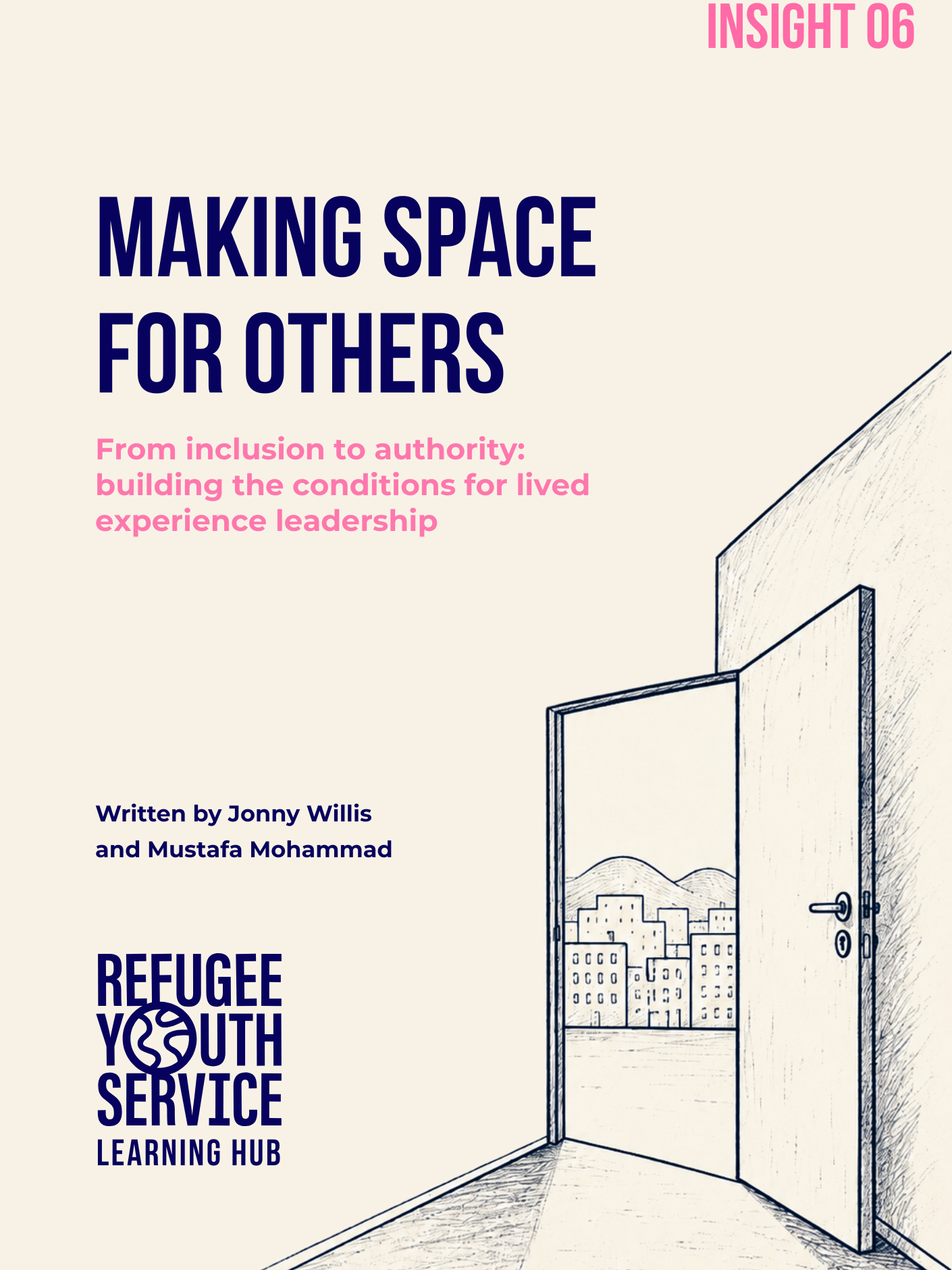
What changes when people with lived experience move from being consulted to holding real authority?
Read more
People with lived experience are often valued in caring organisations because of their closeness to the issues being addressed, and because they can help others understand what might otherwise be missed. But being valued and included is not the same as holding authority. This Insight looks at what changes when lived experience moves from perspective into authority: shaping decisions, leading teams and helping define the work itself. It asks what conditions make that kind of progress possible.
Interpretive Power
Who gets to define a person’s needs, behaviour, story and choices?
Read more
The people who describe a situation often shape how everyone else understands it. In humanitarian, charity and caring work, practitioners and organisations may hold significant power to interpret another person’s needs, behaviour, story and choices.
This Insight explores how those interpretations can influence decisions, relationships and access to support. It asks whose understanding is treated as authoritative, what may be lost when complex lives are reduced to professional narratives, and how we can make more space for people to define their own experiences.
Ending Well
What responsibilities remain when support, a project or an organisation comes to an end?
Read more
Endings are an unavoidable part of humanitarian, charity and caring work, but they are often treated as an administrative task rather than a meaningful stage of the relationship. This Insight explores what it means to end support, close a project or leave an organisation with honesty and care. It considers the impact of endings on the people involved, the risks of leaving too quickly or vaguely, and how thoughtful closure can protect trust, dignity and the value of what has been shared.
Practice Guides

The RYS Practice Model
What principles shaped how RYS worked across different countries and projects?
Read more
Across different countries and projects, a consistent set of principles shaped how RYS worked alongside children and young people. This Practice Guide brings those principles together in one clear model. It is intended to help practitioners and organisations consider not only what support they provide, but how power, presence and everyday practice influence the experience of those receiving it.
Building Safe Spaces for Children and Young People on the Move
What helps a space feel genuinely safe, supportive and welcoming?
Read more
Safe spaces are created through more than a building or programme. They depend on trust, consistency, clear boundaries and the quality of everyday relationships. Drawing on RYS’s work in France, Greece, Italy and the UK, this Practice Guide explores the practical elements that help children and young people feel secure, respected and able to participate.
Meeting an Unaccompanied Child for the First Time
How can a first meeting create safety, clarity and the basis for trust?
Read more
A first meeting can shape whether a child feels safe, respected and willing to engage. This Practice Guide offers practical guidance for approaching that moment with care. It explores preparation, introductions, language, consent, expectations, professional boundaries and the importance of avoiding assumptions or rushing into assessment. It also includes common mistakes to avoid, helping practitioners create a first encounter that feels human, clear and grounded rather than procedural or overwhelming.
Monitoring Progress Together
How can progress be understood with people rather than measured for them?
Read more
Progress monitoring can easily become something done about people rather than with them. This Practice Guide explores a more participatory approach, in which the person being supported or cared for helps define what progress means, reflects on change and shapes the support they receive. Drawing on RYS’s practice, it considers accessible tools, collaborative goal-setting, regular review and the limits of formal outcome measures. The aim is to make monitoring useful beyond the organisations and funders that require it.
Tools

Why am I here?
A motivation and role reflection tool
A guided worksheet helping people explore what draws them to the work, what they hope to contribute, and how personal needs or expectations may shape their practice.
Understanding Progress Together
A collaborative progress-mapping tool
A simple visual tool that helps a person identify what progress means to them, reflect on change and agree future priorities with the practitioner supporting them.
Reflective Case Conversations
A supervision and team discussion tool
A structured template for discussing a case without moving too quickly into advice or problem-solving; to help teams consider relationships, power, uncertainty, emotional responses and possible next steps.
The Boundary Check
A practical tool for noticing when support is becoming blurred, overextended or too dependent on one person
A practical tool for noticing when support is becoming blurred, overextended or too dependent on one person.