
An archive of Refugee Youth Service’s work from 2016 to 2026, and a learning hub sharing resources developed through that work.

Our Story
Between 2015 and 2026, Refugee Youth Service supported displaced unaccompanied children and young people to restart and rebuild their lives.
RYS was founded in the camp settlement in Calais, France, formerly known as “The Jungle”, and went on to deliver work in Italy, Greece and the UK.
More information about RYS’s work and projects, including its training of around 1,000 frontline workers and practitioners, can be accessed through the main menu bar above.
HOW DID RYS WORK?
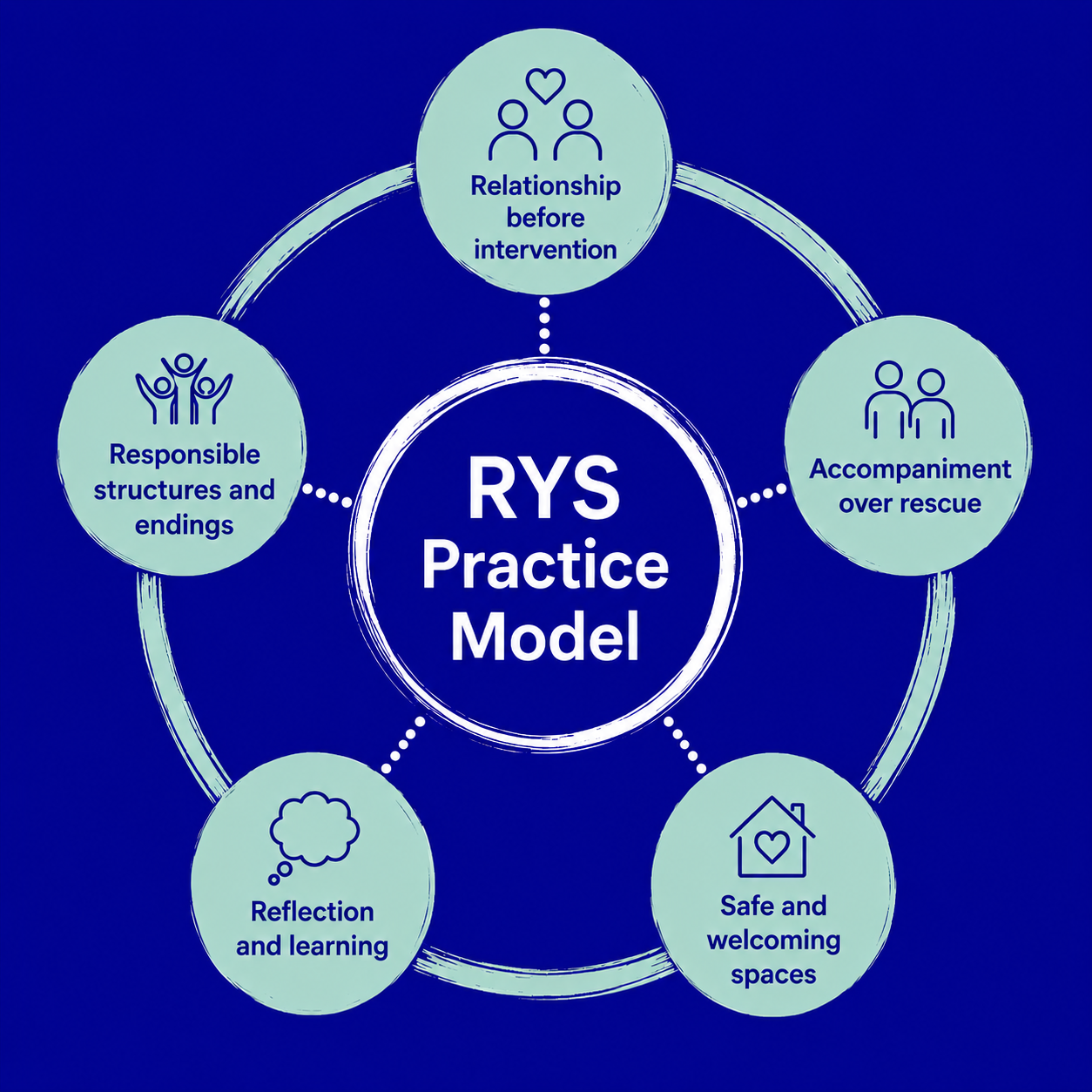
Five foundational elements that shaped RYS’s practice from 2016 to 2026.
Read more
These five elements worked together rather than as separate ideas. Together, they shaped how RYS built relationships, delivered specialist support, created safe spaces, reflected on practice and developed structures around the work. The RYS Practice Model brings them together and captures the approach developed through ten years of frontline experience.
Read more
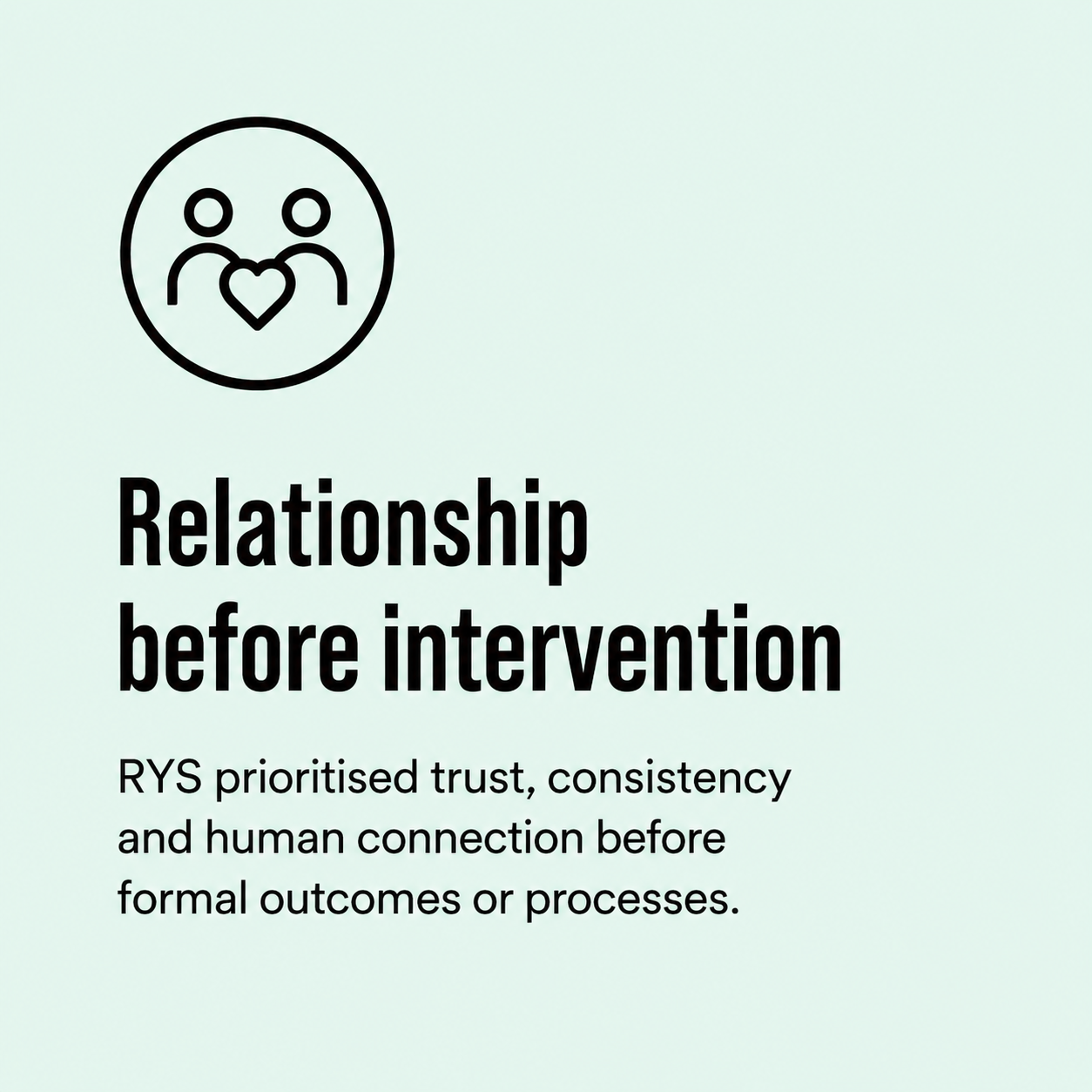
RYS treated relationships as the foundation of support, not as something separate from the practical or specialist work. Legal advice, social work and casework were integrated into a wider team so that support was built around trust, consistency and an understanding of the young person’s broader situation. This helped keep services connected, personal and responsive rather than fragmented into separate interventions.
Read more
RYS understood safe spaces as more than physical locations. Safety was created through trusted relationships, predictable routines, clear boundaries and the way children and young people were welcomed and treated. Activities, food and opportunities to participate helped create moments of belonging and normality within lives often shaped by uncertainty.
Read more
RYS aimed to work alongside children and young people rather than take control of decisions or position itself as the solution. Support focused on helping people understand their options, access what they needed and make informed choices. Progress was reviewed with young people, rather than measured for them, so they could help define what change meant and what should happen next. The exception was where child-protection concerns required RYS to act, even without the young person’s agreement.
Read more
RYS treated reflection as part of the work, not something separate from it. Teams were encouraged to question assumptions, discuss uncertainty and notice how relationships, emotions and organisational pressures were shaping practice. Supervision, team conversations and feedback from young people helped RYS keep learning and adapt when an approach was not working.
Read more
RYS learned that good care could not depend on the commitment or resilience of individual staff alone. Clear roles, shared responsibility, supervision, boundaries and realistic workloads were needed to keep support safe and sustainable. The same principle applied to endings, which required honest communication, careful planning and attention to the impact on the people involved.